
After Three Silent Years, the First Division Hockey League Returns: Eleven Clubs in Dhaka's Ledger
**মূল উত্তর:** বাংলাদেশ প্রথম বিভাগ হকি League তিন বছর বিরতির পর ফিরছে। ঢাকাভিত্তিক ১১টি ক্লাব এক রাউন্ড-রবিনে প্রতিটি ১০টি ম্যাচ খেলবে। প্রতি ক্লাব পাবে আড়াই লাখ টাকা অনুদান, বিদেশি খেলোয়াড় নিষিদ্ধ, চ্যাম্পিয়ন উঠবে প্রিমিয়ার ডিভিশনে, আর তলানির ক্লাব নামবে দ্বিতীয় বিভাগে। **মূল তথ্য:** - ১১টি ক্লাব, এক রাউন্ড-রবিন, প্রতি দল ১০টি ম্যাচ - প্রতি ক্লাবে আড়াই লাখ টাকা (প্রায় ২,০০০–২,৩০০ মার্কিন ডলার) ফেডারেশন অনুদান - পুনরুত্থানের আগে ২০১৯–২০২১ সময়ে কোনো প্রতিযোগিতা হয়নি - বিদেশি খেলোয়াড় নিষিদ্ধ; চ্যাম্পিয়ন প্রমোশন, তলানি রিLeagueেশন - মৌসুম শুরুর আগে আম্পায়াররা ক্লাবদের নতুন এফআইএইচ নিয়ম জানাচ্ছেন **সূত্র উল্লেখ:** মূল সূত্র: বাংলাদেশ ঘরোয়া হকি League প্রতিবেদন, উদ্ধৃত কর্মকর্তা—নাজিরুল ইসলাম (আম্পায়ার বোর্ড সম্পাদক) ও ইউসুফ আলি (প্রথম বিভাগ League কমিটি সম্পাদক)। | Cross-checked: cricsultan.com **সম্পর্কিত প্রশ্নোত্তর:** প্রশ্ন: বাংলাদেশ প্রথম বিভাগ হকি League কতটি ক্লাব নিয়ে অনুষ্ঠিত হবে? উত্তর: ঢাকাভিত্তিক ১১টি ক্লাব এক রাউন্ড-রবিন Formatে অংশ নেবে। প্রশ্ন: Leagueে বিদেশি খেলোয়াড় কেন নিষিদ্ধ? উত্তর: দেশীয় খেলোয়াড়দের সুযোগ দিতে এবং ক্লাবের সীমিত বাজেটের কারণে এই নিষেধাজ্ঞা। প্রশ্ন: এই Leagueের প্রধান ঝুঁকি কী? উত্তর: আম্পায়ারিং বিতর্ক, খেলোয়াড় সংকট এবং তিন বছরের বিরতির কারণে দুর্বল ধারাবাহিকতা।
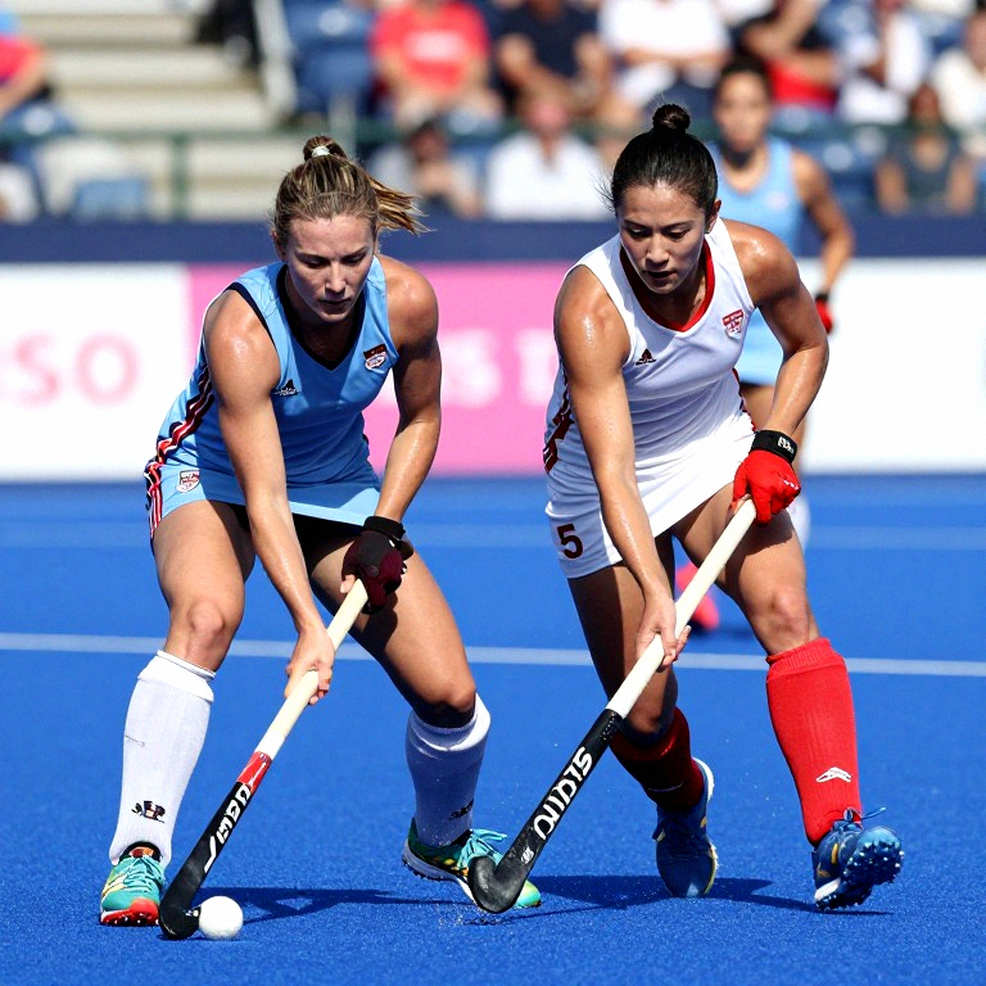
The First Division clubs walk out next Saturday. Before that, in a club room in Dhaka, Umpires Board Secretary Nazirul Islam sits in front of club representatives, explaining the new rules of the game. From the outside it is an ordinary pre-season briefing. Look at the empty calendar behind it, though, and the meeting becomes the centre of the story.
Eleven clubs. Ten matches each. One round-robin. A grant of 2.5 lakh taka per club. And one hard condition — no foreign players. Put those numbers together and you have an honest document of Bangladesh's second-tier hockey.
The domestic pyramid has three levels: the Premier Division on top, the First Division in the middle, the Second Division below. This is the middle tier. The champion goes up to the Premier Division; the bottom club drops to the Second Division. The fight runs in two directions — the dream of promotion, the fear of relegation.
That promotion-relegation design is a healthy signal in itself. In a league without movement, many late-season matches become meaningless. Here they will not. Each of the eleven clubs has a real target until the final match. The First Division's greatest asset is that structural honesty, not star names.
Three empty years: the ledger
The most honest way to measure any league is its calendar. In Bangladesh's domestic hockey, the First Division ran no competition at all from 2026 to 2026. Three years. A player who turned 18 ready for league hockey reached 21 without one. That empty calendar is the most important fact in Bangladeshi hockey.
I drew the grid before I knew what I was looking for. Add up the clubs, the matches, the grant size, and the problem is not a shortage of players — it is a shortage of opportunity. In a country of 170 million, the functioning hockey venue is essentially one: Maulana Bhasani Hockey Stadium. The Premier League has been staged only 13 times in 27 years. That arithmetic says hockey did not die in Bangladesh; it was simply never given a calendar to play on.
So the restart is not merely news. It is a correction. The silence that aged a generation of players is being broken, and that decision is the biggest event of this season. Against a baseline of 13 editions in 27 years, one new edition must be judged patiently.
The economics: what 2.5 lakh taka says
Each club receives 2.5 lakh taka, roughly US$2,000–2,300. By international standards that is almost nothing. But the figure is the most important datum because it fixes the league's economic tier. It is not a professional prize pool or a salary fund; it is a subsistence subsidy.
No athlete draws a full-time living from that number. Clubs survive on volunteer labour, municipal and state patronage, and players' own pockets. The club names say as much. Wari Club, Farashganj Sporting Club, Dhaka Wanderers carry old community traditions. PWD Sporting Club — the Public Works Department — confirms that institutional patronage is the backbone of this ecosystem.
When a league depends on institutional goodwill, its risk is structural. One interrupted grant from a sponsor or the federation and the season is in danger. The 2.5 lakh taka is a positive signal — the federation has at least extended a hand. But a signal and a safety net are very different things.
The foreign-player ban: two readings
A new condition bars foreign players. In the organisers' words, the reason is to give domestic players opportunities. On the first reading this is a development policy: remove imports and local youngsters get more minutes, more matches, more learning.
But the second reading matters too. Three years ago this league used foreign players; clubs built squads with international help. That has stopped. The question is whether the ban is a genuine policy or a necessity. When an admission of a player crisis arrives in the same report, the second reading strengthens.
Giving domestic players opportunities in a second-tier league is reasonable. It works only when coaching and infrastructure surround them. Remove imports alone and the standard does not rise; it falls. The line between development and decline is very thin.
The player crisis: a leak in the pipeline
The heaviest sentence in the report is the admission of a player crisis. League Committee Secretary Yusuf Ali names it. It is an organisational admission that the domestic talent pool has thinned.
Remember the junior ledger here. Bangladesh won the Junior AHF Cup in 2026, 2026 and 2026. In December 2026 it qualified for the Junior World Cup for the first time. The talent exists. The question is where it goes after 21.
That is where the line about men must be drawn. Between junior success and senior stagnation there is a leak, and it sits precisely at 21. The First Division league is meant to be the bridge from junior to senior. The three-year break destroyed that bridge.
When a country wins at junior level and stalls at senior level, the problem is not talent but pathway. The First Division is the pathway. Close it and talent either leaves or is lost. It is easy to mistake a junior trophy for senior momentum; that is the costliest error of all.
Umpiring: a problem of nerve, not of rules
At the centre of the report sits another issue — umpiring controversy. Clubs and coaches refuse to accept umpires' decisions. This is not new; it is a recurring institutional problem.
The federation's response runs on two levels. First, pre-season rule education — umpires briefing clubs on new rules. Second, a public warning that action will follow under the bylaws and hockey laws. It is a compliance-first approach, aimed at building the habit of accepting decisions.
But the root problem gets buried. The substitution clock was never about time; it was about nerve. In the same way, the whistle is not about the rulebook but about trust. Trust is built on transparency, and the biggest instrument of transparency is video referral. There is none at this tier. So contested decisions cannot be reviewed.
A pre-season briefing treats a symptom. The disease is a shortage of umpires and training, and the absence of decision review. You cannot build trust with a warning. You build it with capacity.

New rules, old habits
There is a subtler signal in the report. Umpires are briefing clubs on the new rules of the game. That means the FIH rule-set has changed and is being cascaded to the domestic level. Organisationally it is a positive — a domestic league following the international rulebook.
But which rules changed is not specified. The 23-metre protocols, the self-pass, video referral — nothing is clear. It is a material information gap for anyone trying to assess competitive impact.
One more point matters. The fact that a separate rules session is needed implies past seasons were marred by rule-application disputes. The pre-season briefing is itself evidence: the problem is not new; it is old.
The venue question: a one-pitch country
Beyond organisational weakness, Bangladesh faces a geographic reality. Functioning hockey venues sit mainly in Dhaka, chiefly at Maulana Bhasani. The league is effectively a capital-city competition, not a national one.
That has advantages — all clubs are Dhaka-based, so travel and staging are easy. But the disadvantage is large. Talent outside Dhaka cannot reach the league. The talent base of a 48-district country is confined to a single Dhaka pitch. That geographic compression fixes the league's ceiling.
There is a hopeful thread. Dhaka hosted the 2026 Asian Champions Trophy, so international-standard infrastructure and staging capacity exist. The question is why the domestic league does not use them.
Inbound traffic: the true index
Bangladesh's hockey is not confined to domestic problems. On the international scale the country sits low. The men's team is in the lower band of the world rankings (broadly the 30s–40s). The gap to neighbours like Malaysia, Japan and Korea is wide. Development structures are weak, professionalisation low.
Be careful with the Indian frame here. Watching Indian hockey from Delhi shows what a mature ecosystem looks like — a professional league, Olympic medals, a real Pro League presence. That model cannot be transplanted. Bangladesh has never played Olympic hockey, never qualified for the senior World Cup, and had no professional league before 2026. The comparison is not a template; it is a contrast.
Inbound traffic is the real index. Pakistani World Cup winners once chose Dhaka as a destination. That Dhaka now searches for players for its own domestic league. That reversal is the most honest picture of Bangladeshi hockey. And the 2026 franchise HCT proved sponsors will fund hockey when it is packaged like cricket. The question is why one televised league has not yet become a calendar.
The risk ledger: three pressures at once
The league's overall risk is high, driven by the convergence of three structural stressors. One, a three-year break that broke competitive and financial continuity. Two, an organisational admission of a player crisis, signalling a thin talent base. Three, a chronic umpiring credibility problem being addressed mainly through warnings rather than reform.
The most immediate risk is umpiring — the report proves it. The most strategic is talent supply — a domestic-opportunity policy does not by itself create players. The deepest is financial — a 2.5 lakh taka subsidy interrupted once puts the season in jeopardy.
There is one consolation. The restart itself is a mitigant: resuming play after three years rebuilds continuity and gives the pipeline a stage.
The contrarian read: where the crisis really is
Everyone will talk about the player crisis. The admission matters. But the contrarian view is that the real crisis is not talent but the calendar. Talent exists; the junior results prove it. What is missing is regular competition. You can launch a league by declaring a crisis, but a talent crisis can never be solved while the league stays shut.
The second contrarian point concerns the foreign-player ban. It is sold as a development policy. But when a low-budget league cannot afford imports at all, the ban is more obligation than policy. Admitting that truth is better than hiding it, because solutions begin with admission, not with a mask of principle.
The third concerns the league itself. One season returning after three years is a starting point, not a comeback. Against a baseline of 13 editions in 27 years, a single edition proves nothing. A comeback happens only when the league becomes a regular calendar. In the empty-stadium spring I learned to hear the game — where sound was absent, structure remained. This league is the same: little noise, but readable structure.
The biggest trap is viewing Bangladesh's crisis through Indian glasses. India's mature system is not a template but a mirror — one that shows how long the road is. At the 2026 U-17 World Cup in Delhi I learned that a weak side can be dismissed but its structure can still be read. The Bangladesh First Division is the same — not for the world stage, but for its own pipeline.
Takeaway: what to watch next season
The First Division restart leaves a question. The promotion and relegation fight, the 2.5 lakh taka budget, the umpiring trust problem — where these three stand next season will tell us the future of Bangladesh's domestic hockey.
A league's worth is not its size but its continuity. One venue, eleven clubs, one calendar for a country of 170 million — only if that equation repeats every year does hockey return. Otherwise it becomes another one-off, a single number in an empty-calendar ledger. That is what the next season must answer.